Beijing rewards curious travellers with layer upon layer of imperial art, ritual, and grand design. Stand in a palace courtyard where dragon roofs glow after rain, then move to a cedar grove where locals practise slow, measured Tai Chi. Water, stone, and symmetry set the tone, and stories hide in every carved balustrade.
Three Bears Travel builds days here that feel effortless, leaving you free to notice the small details: lacquered doors that still bear the marks of ancient repairs, pavilions aligned with the sun at winter solstice, reflections of painted beams in still water.
Explore Historical Beijing: Forbidden City, Temple of Heaven, and More
Imperial capitals sometimes feel distant. Beijing doesn’t. The rhythm of daily life flows around historic precincts, with elders playing chess beneath ginkgo trees and school groups racing past bronze cauldrons. The city’s headline sights sit at the centre of the nation’s story, and they remain remarkably approachable with the right plan.
The Forbidden City: Imperial splendor
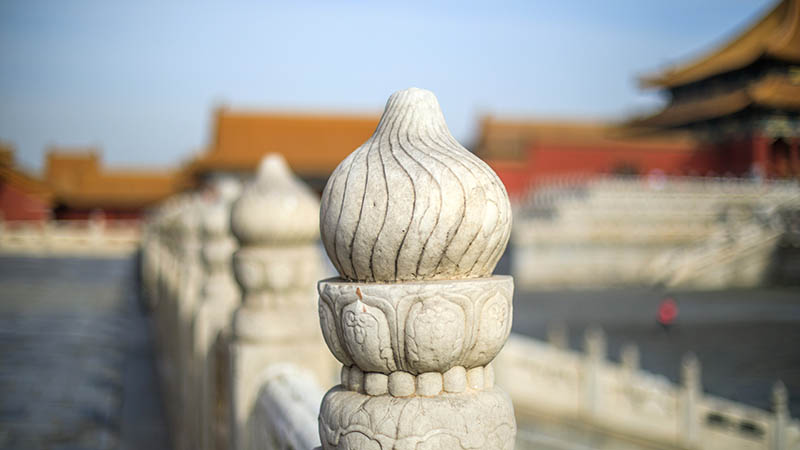
The Forbidden City Beijing, formally the Imperial Palace Beijing and now the Palace Museum Beijing, anchors any visit. This vast walled city of halls and courtyards formed the stage for court ritual, family life, and the machinery of power for centuries. Walk through the Meridian Gate and the scale becomes clear, yet so do the details: tiles glazed in imperial yellow, stone drums carved with cloud patterns, gilded beasts guarding the corners of roofs.
The central axis is famous, but the side courts hold quieter scenes. Calligraphy brushed on slate with water, the soft clack of a wood block, a sudden glimpse of a private garden. The Forbidden City in Beijing rewards patience, and a guide who knows how to thread the crowds helps a lot. Three Bears Travel keeps things moving without rushing, simplifying decisions in a place with nearly a thousand buildings.
Visitor highlights
-
Hall of Supreme Harmony and its marble terraces, best in early morning light
-
The carved stone ramp behind the hall, a dramatic piece of imperial iconography
-
Palace of Tranquil Longevity and the Garden of the Palace of Compassion and Tranquillity
-
Clocks and watches gallery in the former Hall for Ancestral Worship
-
Small exhibits on restoration methods that reveal how these structures keep their colour
Photography fans can time an ascent of Jingshan Park for a skyline view over glazed roofs. It’s just north of the complex, a short climb to catch sunset over the Imperial Palace Beijing with the city beyond.
Practical notes make a difference:
-
The Palace Museum Beijing closes on Mondays.
-
Peak hours run late morning to mid-afternoon; early entry saves time and heat in summer.
-
Tickets are sold by real name, so carry your passport.
-
Shade is limited along the central route; a hat and water bottle help on hot days.
Keywords help travellers find the right spot when mapping routes or booking: Forbidden City Beijing China, the Forbidden City in Beijing, Beijing tours, Beijing tourist attractions. Use them when searching on local apps for hours and entry gates.
Temple of Heaven: Spiritual and architectural marvel
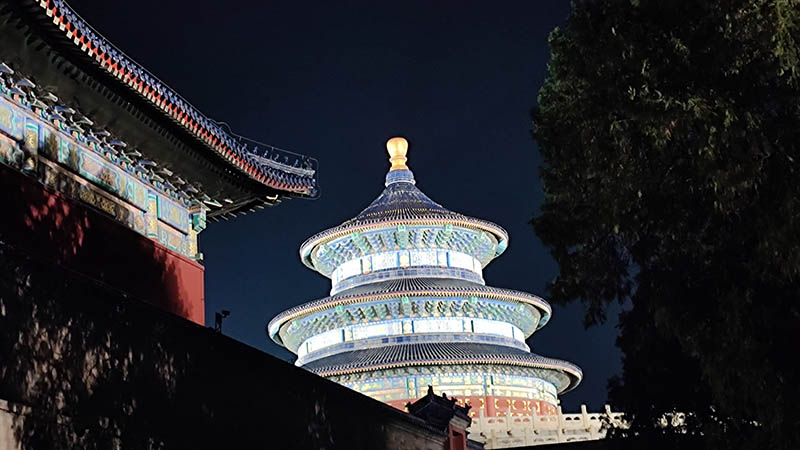
South of the old city walls sits Temple of Heaven Beijing, known locally as Beijing Tiantan. This is where emperors prayed for good harvests, observing a calendar of rites tied to agriculture and the cosmos. The design speaks mathematics: circles and squares, tiers and increments of nine, deep blue tiles meeting the sky.
The Hall of Prayer for Good Harvests rises on a triple-stone terrace, all timber and without nails. It feels light from some angles, almost floating. Step closer and the detail is dazzling: phoenixes, dragons, and auspicious plants, all painted with careful restraint. A short walk away, the Circular Mound Altar and Echo Wall add layers of ritual acoustics and symbolism.
Mornings bring local life into focus. Choirs rehearse under pines. Musicians tune erhus. Tai Chi groups move with control. Three Bears Travel times visits to catch this rhythm and builds in short stops to watch or join in.
Experience and visitor tips
-
Arrive early to see Tai Chi and community activity before tour groups fill the paths
-
The Echo Wall works best when crowds are low
-
Winter air sharpens colours; spring peach blossoms brighten pathways
-
Keep a respectful distance from people exercising or performing; a smile and a nod go far
-
If mobility is a concern, plan a route with fewer steps between the Hall of Prayer and the Circular Mound
Temple of Heaven Beijing China holds UNESCO status for good reason. Its quiet geometry balances the busier energy of the palace. Search terms that help on maps and ticketing platforms: Beijing Tiantan, Beijing China attractions, things to visit in Beijing.
Summer Palace: Royal gardens and scenic views
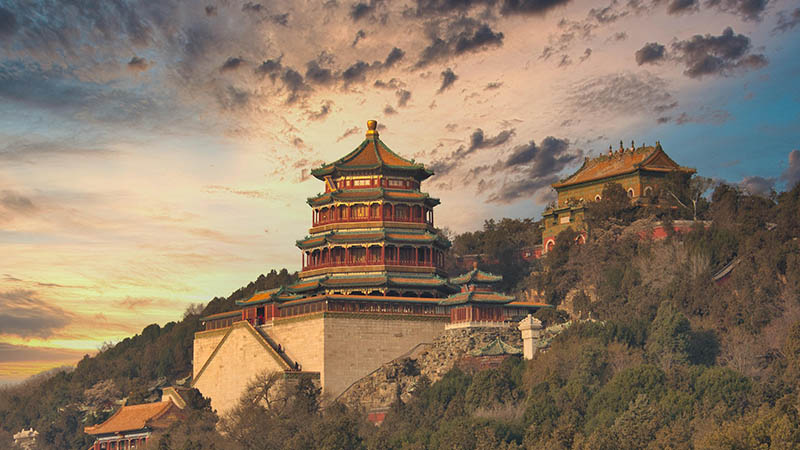
Summer Palace Beijing offers a contrast again: water and hills in dialogue with pavilions and galleries. Built to catch breezes and offer respite from heat, the site spreads around Kunming Lake, with Longevity Hill at its back. You can walk for hours here, following a painted corridor that seems to run forever, or crossing arched bridges where cormorants scan the shallows.
Spring and autumn flatter the setting. Willows tail the water in spring, lotus leaves unfurl through summer, and crisp air in autumn pulls out colour and reflection. Boat rides give different angles on the marble boat, the pagoda, and the shoreline palaces. If your legs tire, take to the lake and glide.
What to see
-
The Long Corridor, with thousands of panels painted with scenes from literature and landscape
-
Seventeen-Arch Bridge, particularly photogenic with winter ice or a glowing sunset
-
The Marble Boat at the western end of the corridor
-
The Tower of Buddhist Incense on Longevity Hill
-
Suzhou Street, a canal market setting that makes for easy strolling
Search phrases worth noting: Summer Palace China Beijing, Beijing Summer Palace, Beijing China attractions. These help when booking timed entries or locating boat piers within map apps.
Quick planner: comparing the big three
A simple overview helps allocate your time across the Forbidden City Beijing, Temple of Heaven, and Summer Palace Beijing. Use this as a guide and tweak to your pace.
|
Site |
Ideal visit length |
Best time of day |
Standout photo spot |
Access tip |
Family-friendly notes |
Closed day |
|
Forbidden City (Palace Museum Beijing) |
3 to 4 hours |
Early morning |
Jingshan Park summit looking south |
Prebook ticket with passport; enter via Meridian Gate |
Vast spaces for prams, limited shade along the axis |
Monday |
|
Temple of Heaven (Beijing Tiantan) |
1.5 to 2 hours |
Early morning |
Hall of Prayer terrace from the south |
Start at the East Gate to catch community activity |
Flat paths, interactive acoustics at Echo Wall for kids |
Open daily |
|
Summer Palace |
3 to 4 hours |
Late afternoon to sunset |
Seventeen-Arch Bridge in warm light |
Ferry between piers to rest feet; consider west gate exit |
Boats and gardens keep kids engaged |
Open daily |
Three Bears Travel can pair two sites in a day without leaving you rushed. A full day across all three is possible, though most travellers prefer two days to keep a relaxed pace.
Additional historical sites
Beijing rewards anyone willing to wander one more block, turn left, and find a courtyard you didn’t expect. Beyond the headline trio, a handful of places add depth to your picture of the capital.
-
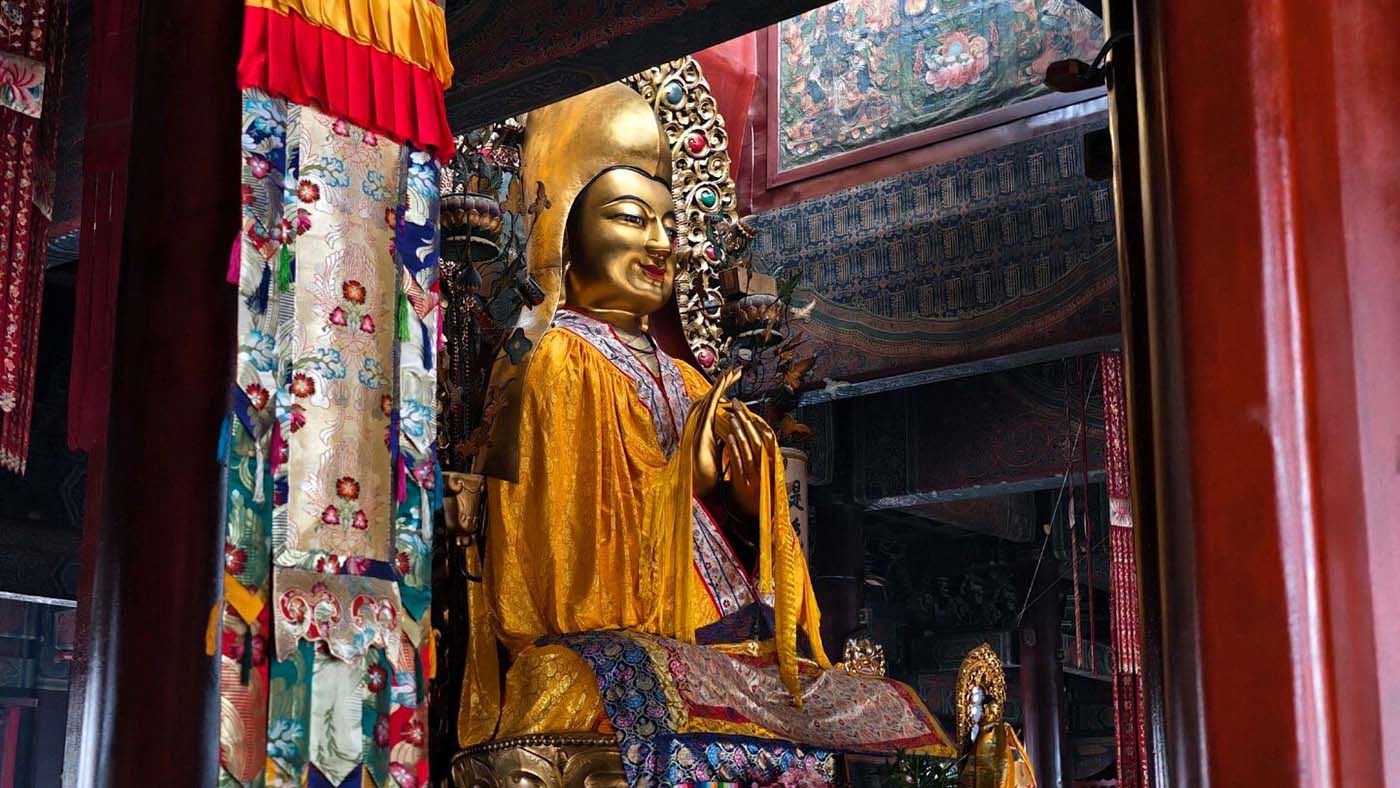
Lama Temple Beijing China: The city’s most celebrated Tibetan Buddhist temple, also signed as Yonghegong Temple Beijing. Incense drifts past paired guardian lions, and the five-storey Maitreya statue, carved from a single sandalwood tree, is a quiet marvel. Try to arrive outside of festival days if you prefer a calmer visit.
-
Yuanmingyuan Park Beijing: Often called the Old Summer Palace, this once vast ensemble of gardens and Western-style palaces now sits in poetic ruin. Broken columns and waterworks tell a layered story of exchange, artistry, and loss. Pack a picnic and wander the lakes.
-
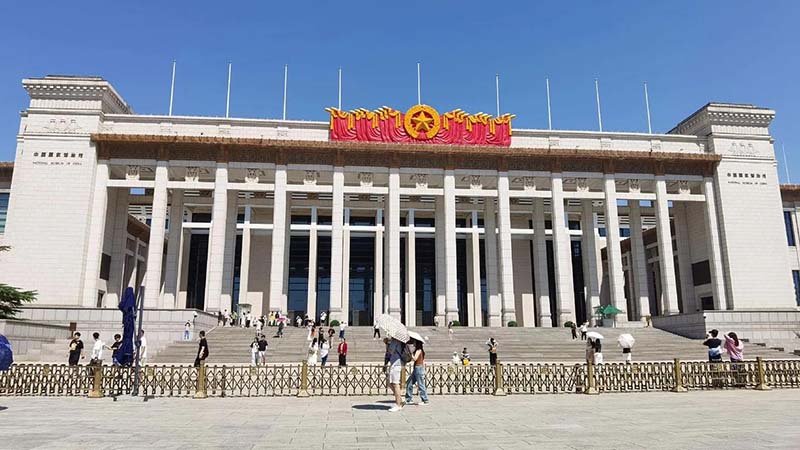
Beijing museums: The National Museum of China on the east side of Tiananmen Square gives clear timelines and rare pieces; the Capital Museum offers well-curated exhibitions with fewer crowds. Smaller spaces tucked into hutongs carry charm, from shadow-puppet collections to calligraphy studios.
Cultural workshops make a welcome change of pace between monuments. Try a paper-cutting class, a tea tasting that compares oolongs and pu-erhs, or a brush-painting session. These hands-on hours tie the architecture and rituals to everyday culture.
A practical itinerary for two or three days
Short trips benefit from a bit of structure. Here are sample outlines that keep transfers tidy and leave room for serendipity.
Two days:
-
Day 1: Forbidden City Beijing in the morning; lunch near Jinshan Park; Jingshan summit for views; hutong walk in the afternoon; Peking opera snippet or acrobatics in the evening.
-
Day 2: Temple of Heaven Beijing at opening; morning tea and park time; afternoon at Summer Palace Beijing; boat ride on Kunming Lake near sunset; dinner featuring Beijing duck.
Three days:
-
Day 1: Palace Museum Beijing central axis with side-court detours; National Museum of China if energy allows.
-
Day 2: Beijing Tiantan at dawn; Lama Temple Beijing China; Wudaoying hutong for cafes and shops; late lunch.
-
Day 3: Yuanmingyuan Park Beijing in the morning; Summer Palace China Beijing after lunch; gentle finish with tea tasting.
Booking with Three Bears Travel means a guide fine-tunes this plan to the season, your interests, and Beijing weather on the day.
Practical tips
The right details save time and frustration in a city of this size. A few essentials make visits to Beijing tourist attractions smoother and more rewarding.
Beijing weather and timing
-
Beijing China weather runs to extremes. Winters can be dry and cold; bring layers, a scarf, and lip balm. Summers bring heat and occasional storms; carry water and a light rain jacket. Spring winds can whip up dust, so sunglasses help. Autumn is often clear and comfortable.
-
Air quality varies. A simple masking policy for yourself and a phone app to check the index each morning are handy.
-
Beijing time follows China Standard Time, UTC+8, with no daylight savings. Sunrise and sunset shift across seasons, so plan photo goals accordingly.
Getting in and around
-
Beijing airport has two major hubs: PEK (Capital) in the northeast and PKX (Daxing) to the south. Both link to the city by rail. The Capital Airport Express connects to lines 2 and 10; Daxing Airport Express runs to Caoqiao station on line 10.
-
Taxis are plentiful, though traffic can be heavy at peak hours. Have your destination written in Chinese. Ride-hailing apps work well once set up.
-
The metro is clean, frequent, and signed in English and Chinese. It’s often the fastest option for cross-town moves during rush periods.
Tickets and payments
-
Many major Beijing China attractions use real-name ticketing. Bring passports for all travellers and book early on weekends and holidays. In most cases, tickets must be reserved in advance, so it’s highly recommended to let Three Bears Travel customise your itinerary to ensure all attractions can be scheduled according to your preferred times.
-
Domestic apps dominate payments. Foreign cards now work on Alipay and WeChat Pay after simple setup using a foreign bank card, which reduces the need for cash. Some small stalls still prefer QR payments or cash.
Food and dining
-
Beijing cuisine runs richer and heartier than coastal styles. Try zhajiangmian noodles, lamb skewers, and warming hotpots.
-
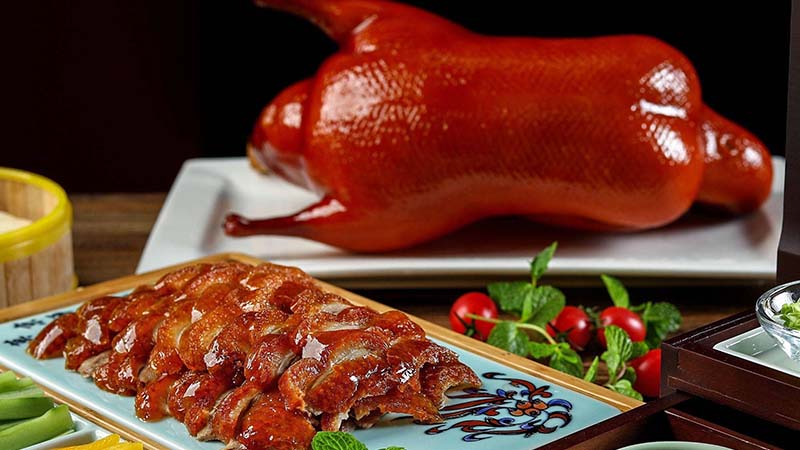
Make time for a meal of Beijing duck. The classic roast produces crisp skin and succulent meat, wrapped in thin pancakes with scallions and sweet bean sauce. Search both Beijing duck and Beijing roast duck when looking up restaurants, as naming varies.
-
Book popular roast duck venues ahead of dinner time, especially on weekends.
Etiquette and comfort
-
Security checks are standard at metro stations and some museums. Keep liquids small and accessible.
-
Respect quiet zones in temples and avoid flashy flash photography inside halls.
-
Toilets are frequent at major sites; carry tissues and hand sanitiser.
-
Wheelchair access varies: Temple of Heaven has flatter paths, while the Forbidden City has steps across thresholds. Three Bears Travel can tailor routes to meet mobility needs.
Seasonal notes
-
Spring: Blossoms in parks and milder temperatures. Wind can be brisk.
-
Summer: Best for evening walks and late sunsets at the lake.
-
Autumn: Clear skies and ideal walking conditions.
-
Winter: Crisp air, fewer crowds, and dramatic light on stone and tile. Ice activities appear on lakes when conditions allow.
Why guided days work well here
Self-guided visits can be rewarding, though time gains from a guide are significant when you add ticketing, transfers, and smart routing. Three Bears Travel focuses on:
-
Reserving attraction tickets in advance to ensure your itinerary stays on schedule
-
Balancing major halls with quieter side courts
-
Timing entries to dodge peak queues
-
Weaving stories of architecture, astronomy, and daily life
-
Adapting the day to heat, cold, or a passing storm without losing momentum
It means you see more while feeling less rushed.
Small moments that stay with you
A palace guard cat slipping between carved balusters. The faint smell of cypress resin along a back path at Beijing Tiantan. A family sharing a paper cone of hawthorn candy while waiting for a boat on Kunming Lake. These are the details that lock memories in place.
Historic sites can feel abstract until you notice something ordinary beside the grand. Let the big halls impress you, then give yourself five quiet minutes in a side garden. That balance brings the city into focus.
If you prefer someone else to handle the logistics, Three Bears Travel is ready with well-paced Beijing tours that highlight the essentials and leave room for those small, human scenes that make a trip feel personal.
Want more China travel itineraries? Click here!
If you have any other questions, feel free to click here and get in touch with us.
If you need a personalized travel plan, feel free to click here and let us help you.