Rushing out of the Tibetan Plateau and carving a 6,300 kilometre path to the East China Sea, the Yangtze River carries history, trade, and the lifeblood of villages and megacities. Where it narrows into a dramatic corridor of cliffs and mist, humans built a wall of concrete and steel that changed the course of the river and the story of modern China. The structure often called the Three Gorges Dam is not just big. It is a statement of intent about energy, safety, and the possibilities of engineering. For travellers with Three Bears Travel cruising the Yangtze River China, it is also an eye-opening stop that blends scenery with sheer scale.
More Than Just Size: The Dam’s Lasting Impact
The scale is only one part of it. The dam is a set of choices about water, people, ecosystems, and power. That is why a visit here tends to stick with you. It is not just a photo stop. It is a chance to see how a nation grappled with floods that stretched back centuries, rising energy demand, and the need to move goods and people deeper inland.
A project like this invites many questions. It also rewards patience. Give it time and context and it reveals itself.
Why This Site Mattered Long Before the First Concrete Pour
Floods along the Yangtze riverside have shaped generations, with high water often damaging farmland, factories, and homes downstream. Memories of major 20th-century floods remain vivid in local stories.
As electricity demand soared, hydropower emerged as a cleaner alternative to coal, promising stable energy and less pollution. Engineers also sought to overcome the river’s natural barriers, which limited navigation for large cargo vessels.
These challenges made a large-scale hydropower and water management project like the Three Gorges Dam inevitable. After years of study and debate, construction began in 1994.
A Quick Snapshot of the Structure
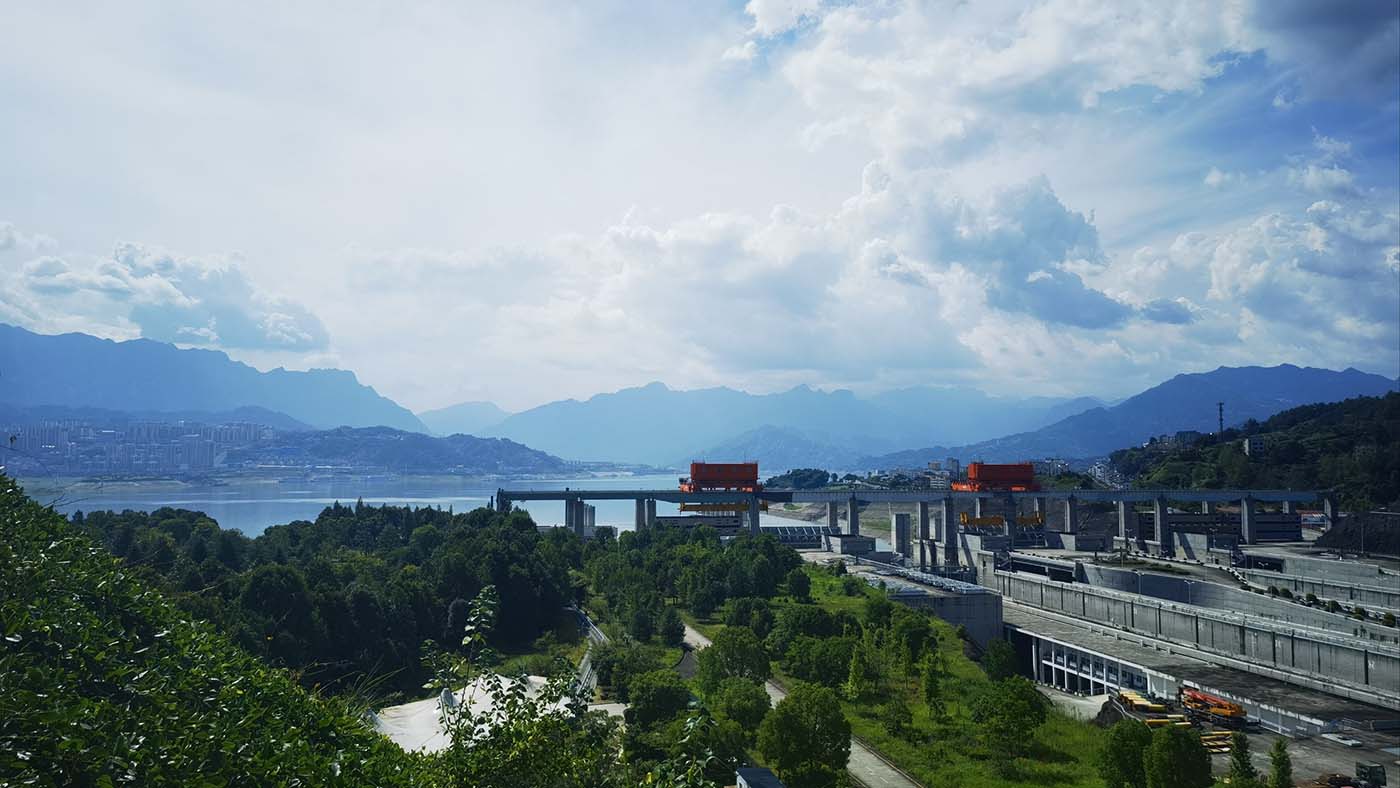
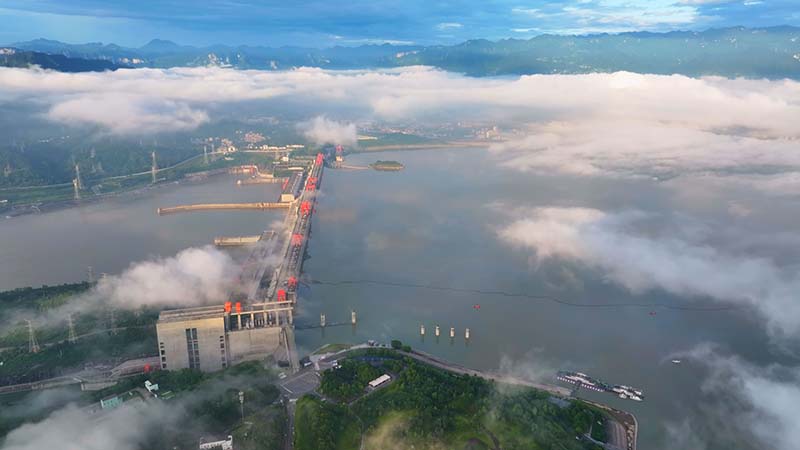
The Three Gorges Dam on the Yangtze River in China sits near Sandouping in Yiling District, part of Yichang City. It is the largest hydroelectric power station by installed capacity on the planet. Workers finished the main structure in the mid-200s and completed the full generator array in 2012.
Key Things Most First-Time Visitors Remember
-
It stretches beyond your peripheral vision on a clear day.
-
The scale becomes real only when you see a cargo ship look like a toy at the base of the spillways.
-
The terraces and viewpoints nearby give angles that make sense of the site.
Fast Facts You Can Keep in Your Pocket
|
Feature |
Detail |
|
River |
Yangtze River China |
|
Province |
Hubei |
|
Nearest city |
Yichang |
|
Structure length |
About 2,335 metres |
|
Height |
About 185 metres |
|
Installed capacity |
22,500 megawatts |
|
Turbines |
32 main units plus smaller in-station units |
|
Annual generation |
Often around 100 terawatt-hours, with peak years higher |
|
Reservoir length |
Around 600 kilometres through the Three Gorges |
|
Flood control storage |
Tens of billions of cubic metres reserved for flood moderation |
|
Navigation works |
Twin five-step ship locks and a vertical ship lift |
|
Ship lift capacity |
Vessels up to roughly 3,000 tonnes |
|
Construction timeline |
1994 to 2012 for power units, ship lift opened later |
Those numbers are impressive on paper. In person, the site reads more like a valley-length infrastructure landscape than a single building. Powerhouses, spillways, locks, anchorages, roads, and terraces run together into a complex that feels almost like a small city built for one purpose.
Clean Energy at the Scale of a Province
The card everyone knows is power. The Chinese Yangtze River dam generates enough electricity to supply tens of millions of homes a year, depending on demand and water conditions. At full output it can approach 22.5 gigawatts, far beyond a single coal station. Hydropower like this is dispatchable within minutes, which helps smooth grid fluctuations and back up variable wind and solar.
There is a climate story here too. Each unit of electricity from the dam replaces generation that would otherwise come from fossil fuels. Estimates vary, but the avoided carbon dioxide runs into tens of millions of tonnes each year, along with reductions in sulphur dioxide and soot that worsen city air.
Beyond households, this energy supports factories from Wuhan to Chongqing, port terminals, and the transport corridors that tie the inland west to the coast. When travellers sail past river towns at night and see the hillside lights glowing, it is easy to forget what it took to make reliable power routine.
Holding Back the River During High Water
Flood control is quieter than power, but ask residents downstream and you will hear why it matters. The operator holds a large volume of the reservoir empty ahead of the wet season. When heavy rain hits the upper basin, inflows can spike. The dam can then store a portion of that surge, release water in a controlled way, and shave the peak height downstream.
During major floods in recent years, inflows were measured at rates that would have posed real risk to low-lying cities without such storage. Releases were stepped down to protect communities along the middle and lower reaches. The difference shows up in graphs and in lived experience.
This work depends on forecasts, basin-wide coordination, and constant monitoring. Reservoir managers watch upstream rainfall, tributary inflows, and conditions below the dam. It is a balancing act between safety, power generation, and navigation, and it is carried out in real time.
A New Water Highway for China’s Interior
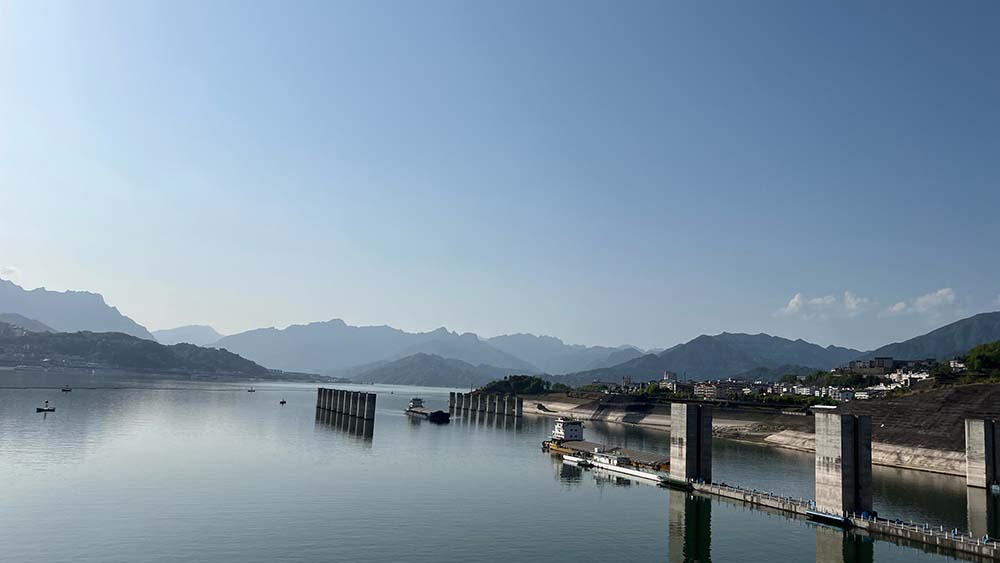
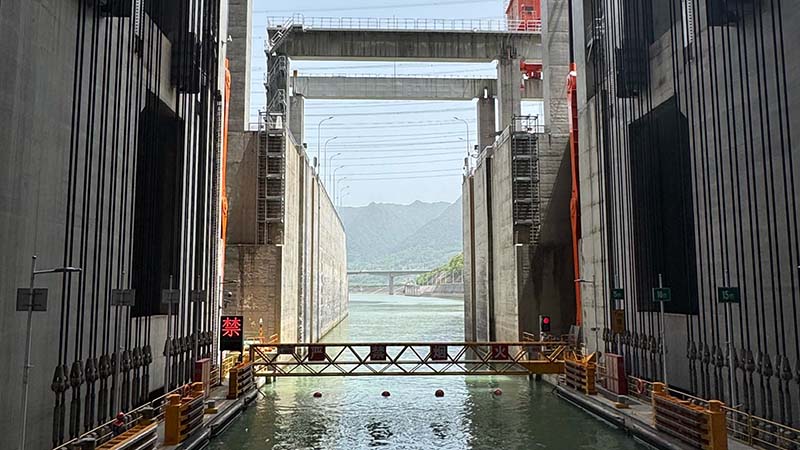
The gates and turbines get the attention, yet the navigation works are the parts many visitors find most captivating. Twin five-step ship locks lift or lower fleets of barges and cargo vessels between the upper and lower reaches. Each lock chamber fills or empties like a giant bathtub, raising a queue of vessels one terrace at a time.
-
With deeper and calmer water above the dam, year-round navigation improved.
-
Larger cargo ships now reach far deeper inland than before.
-
Transit times and freight costs dropped on routes serving Chongqing and neighbouring ports.
The Ship Lift: An Engineering Marvel
The star for many is the ship lift. This vertical elevator carries a single vessel in a water-filled chamber straight up or down in about 40 minutes. It is a feat of precision engineering. Watching a 2,000 to 3,000 tonne boat rise against the concrete face makes the scale and accuracy of the machinery feel personal.
For traders and manufacturers across central and western China, these changes altered logistics. For travellers, they add a moving theatre set to a river cruise.
What You Will See on a Visit with Three Bears Travel
A Yangtze cruise feels different once you have seen how the water is managed. Three Bears Travel itineraries that include the dam usually stop near Yichang, where you transfer by coach to official viewpoints. Allow several hours. Security is strict, so bring your passport, and expect airport-style checks.
Classic Viewpoints Include
-
Tanziling Ridge: The big panorama spot. You see the arc of the dam, the spillways, the powerhouses, and the locks in a single sweep. On a clear day the sense of scale is unmistakable.
-
The 185 Platform: Named for the crest elevation of the dam, this vantage offers a more intimate look at the roadway and machinery.
-
Exhibition Centre: Models, photos, and a concise history of planning and construction. A good stop before the terraces.
Practical Tips for a Smooth Day
-
Best months: April to May, and September to October for milder weather and clearer skies.
-
Timing: Morning visits reduce haze. In summer, late afternoons can bring dramatic light.
-
What to bring: Photo ID, a light jacket in cooler seasons, hat and water in summer, and a wide-angle lens if you like photography.
-
Be patient: Buses shuttle between platforms. Lines can form during peak seasons.
-
Ask questions: Guides who work this route daily have fresh information on water levels, lock operations, and ship lift scheduling.
Sample Day with a Downstream Cruise
-
Depart your ship after breakfast and board the coach for the viewpoint circuit.
-
Visit the exhibition centre for context and to orient yourself to the layout.
-
Head to Tanziling Ridge for the wide shot, then to the 185 Platform for detail.
-
If available on the day, watch a convoy move through a lock or see a lift cycle.
-
Return to Yichang to rejoin the vessel or connect to your next leg by rail or air.
Why This Stop Fits Neatly into a Broader Yangtze Itinerary
A Yangtze voyage is often a mix of limestone cliffs, misty mornings, and quiet villages. The Three Gorges Dam adds a sharp modern counterpoint. It brings together the physical force of the river and the scale of human ambition. It also gives travellers a chance to talk with guides and locals about change, memory, and plans for the future.
For guests travelling with Three Bears Travel, the stop works well because it adds a strong narrative arc to the cruise. The river is not just scenic. It is a working system that powers cities and carries cargo. The visit makes that real.
Questions People Ask Before They Go
Is the site safe to visit?
Yes. Visitor areas are purpose-built with railings, surveillance, and controlled access. Follow your guide’s directions and posted signs.
How far is it from Yichang?
The main visitor area is within an hour by coach from central Yichang, depending on traffic and security checks.
Will I see water roaring through the spillways?
It depends on the season and the day’s operations. In wet months the spillways are more likely to be in use. Even when they are closed, the view over the locks and powerhouses is impressive.
Can I ride the ship lift?
Tourist access to the lift itself is restricted. Some cruises align schedules to let you observe lift operations from vantage points.
Is this really the biggest dam?
The Yangtze River Dam China is the largest by installed power capacity. Others surpass it in height or reservoir size, but on electricity generation it sits at the top of the league.
What about its impact on heritage and wildlife?
The impacts of the Three Gorges Dam are real, and researchers continue to study them. You will find balanced exhibits at the visitor centre that address archaeology, resettlement, and ecology.
A Close Look at the Numbers Behind the Headlines
Many articles copy the same figures. It helps to approach them with a bit of nuance.
-
Power: Installed capacity is a ceiling. Year-to-year output depends on rainfall, inflows, and grid demand. Some years set records above 110 terawatt-hours. Dry years sit lower.
-
Flood control: Storage is finite. When a very large multi-basin event hits, the dam reduces risk but cannot eliminate it downstream. It is one tool among many, including levees, wetlands, and planning rules in floodplains.
-
Sediment: Moving sediment through a long reservoir is hard. Timed flushing and spillway releases shift some load past the dam, yet the balance is delicate and requires ongoing management.
What This Tells Us About Modern China
A single piece of infrastructure can only say so much. Yet the China Yangtze Dam gives a clear picture of national capacity to plan, pay for, and deliver a project that touches energy, water, and trade all at once. It also shows the willingness to accept and mitigate trade-offs at a national scale.
Policy has since encouraged more renewables across the grid, from vast wind bases to rooftop solar in cities. Hydropower remains a backbone source, helping to backstop variable generation and keep the grid stable. The dam near Yichang is central to that system.
Travelling Upstream: Linking It to the Gorges and Beyond
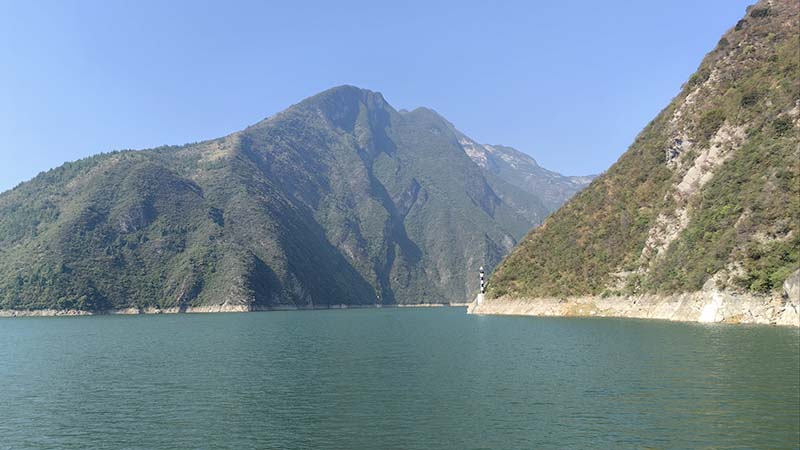
Cruises that continue through the Three Gorges glide into some of the most famous scenery in China. Qutang Gorge narrows between near-vertical walls. Wu Gorge folds into a series of green peaks. Xiling Gorge, long known for shoals and treacherous currents, now offers a calmer passage.
-
Keep your camera ready for morning mists and cliff-top temples.
-
Listen for the change in the ship’s engine note as it enters narrower stretches.
-
Chat with your guide about local legends tied to each cliff and peak.
Seeing the Three Gorges Dam first helps you read the rest of the river with fresh eyes. The stillness above the reservoir alternates with moments when you can sense the old flow of fast water beneath the surface.
How the Visit Integrates into a Three Bears Travel Package
A well-planned itinerary threads the needle between spectacle and context. Expect:
-
Pre-visit briefing on the coach, covering the day’s security and timing
-
On-site explanations that match each viewing point to a part of the story
-
Space for photos and quiet, especially at the 185 Platform
-
A wrap-up as you reboard, linking what you saw to the next stages of the cruise
If you like to prepare, ask for a short reading list on the Yangtze Dam China before you sail. A half-hour with a good map of the basin makes the day richer.
Words That Linger After You Leave
The phrase many visitors use is simple: it was bigger than I imagined. Big in scale, yes, but also big in how it reframes the river. The structure does not replace the beauty of the gorges. It sits alongside it, a sign of how people use water and shape their surroundings.
From a terrace above the spillways, watching a convoy work through the locks, it is easy to see both ancient river routes and modern supply chains. That combination is rare. It is worth seeing with your own eyes.
Key Phrases and Names You Will Hear Along the Way
-
Three Gorges Dam
-
Yichang
-
Sandouping
-
Ship locks
-
Vertical ship lift
-
Flood control storage
-
Installed capacity
-
Powerhouse
-
Yangtze riverside
For travellers who enjoy connecting landscapes with ideas, the stop ties together geology, engineering, policy, and daily life in one sweep. The Chinese Yangtze River dam is a piece of living infrastructure. It runs day and night. It lights homes and factories. It shapes the rhythm of shipping. It changes the meaning of floods for cities downstream. Seeing that up close is one of the highlights of any well planned Yangtze cruise.
The river will outlast any building, of course. Yet the structure holds the current in a steady hand, and for a moment, watching from the ridge, you can feel how much care and calculation it takes to make a waterway safe, useful, and part of a cleaner energy future.
Want more China travel itineraries? Click here!
If you have any other questions, feel free to click here and get in touch with us.
If you need a personalized travel plan, feel free to click here and let us help you.